A Counterposition to Artificial Intelligence
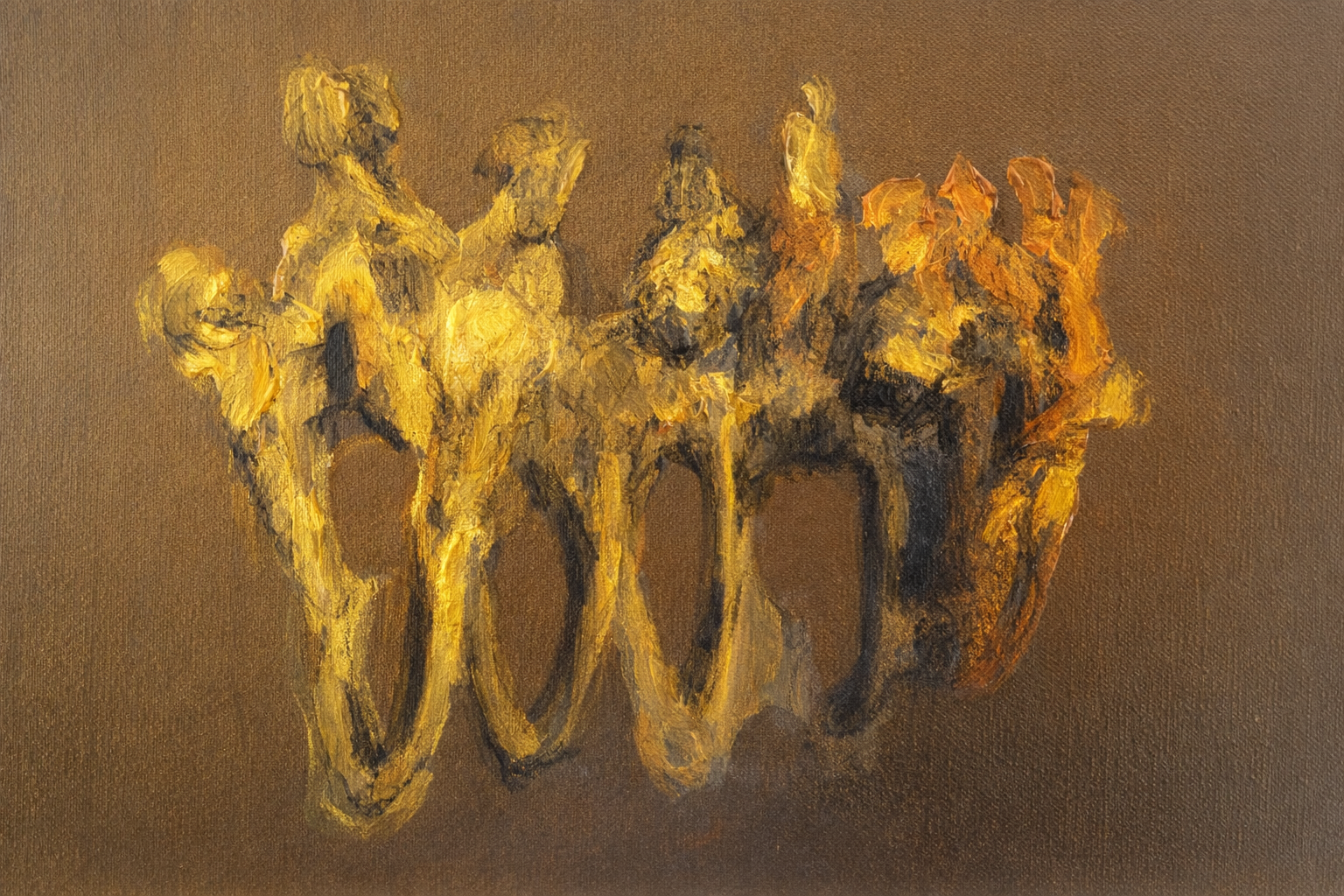
Painting by Damián Comas
An Exhibition by Damián Comas
February 23–28, 2026
Maison Fraternelle
37 Rue Tournefort, 75005 Paris
Opening hours: 4:00 PM – 8:00 PM
Free entry
Vernissage: February 23, 2026 at 6:00 PM
Finissage: February 28, 2026 at 6:00 PM
Every new technique has initially been received with fear. Photography was no exception. It was believed it would erase drawing, impoverish perception, and replace lived experience with its immediate copy. The opposite occurred: photography liberated art from the obligation to reproduce the visible world and opened a new way of knowing it. It allowed us to see the invisible—from the structure of a cell to the vastness of the cosmos—became an art in itself, and later gave rise to the most decisive invention of our era: cinema, that form of time.
Artificial Intelligence now occupies a similar place in our collective imagination. It is feared as a substitute, a threat, a simulation of the human. Yet its intelligence belongs to a different order. It lacks lived memory, emotion, and forgetting. It is a vast machine of combinations, a library without experience. It will be immensely useful for organizing data, forecasting scenarios, assisting diagnoses, and automating processes. But it cannot desire, doubt, or remember in an intimate way. Much less can it create out of necessity.
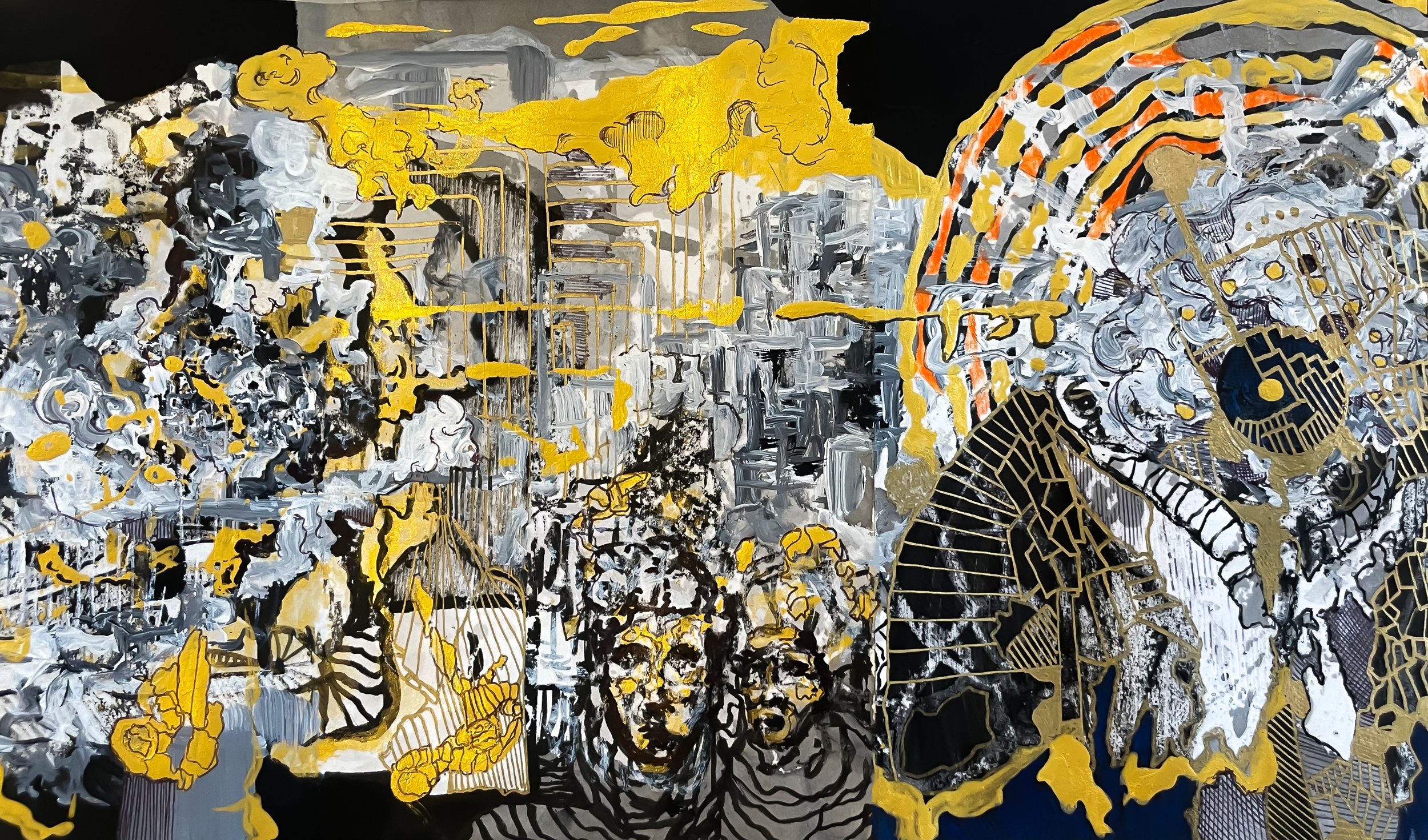
Fragment from The Silent Book
Like photography in its time, AI will relieve human beings of many mechanical tasks. But the final decision—the ultimate gesture—will remain human. In art, this means that only what truly justifies its existence—through risk, fragility, or truth—will deserve to be made by a hand and shared with other bodies in time.
The images of The Silent Book do not refer to events, nor do they attempt to fix a visible reality. They do not arise from the external world, but from a zone prior to all reference: the author’s unconscious. Here, form obeys neither models nor memories, and even less imitation. Nothing has been observed in order to be translated. Each drawing occurs as if for the first time.
These pages do not seek representation, but the leaving of a trace whose cause cannot be fully explained—a trace suspended between chaos and order, between fullness and absence. There is no calculation or optimization here. Only time, doubt, and a deliberate imperfection: that of the hand that feels and observes.
The silent book does not rely on words, nor does it narrate through them. Not because it rejects language, but because it is born precisely from what cannot be contained within it. It does not transmit information, nor does it compete with abundance or speed. Instead, it proposes an irrepeatable experience—one that cannot be delegated. Its silence is not empty: it is a form of knowledge that reveals itself only to those who advance page by page, accepting juxtaposition and interval.
Drawing, understood in this way, is not a technique for imitating the visible, but one of the few paths we still possess for seeing what inhabits memory, forgetting, intuition, time, and everything that persists beyond the real.
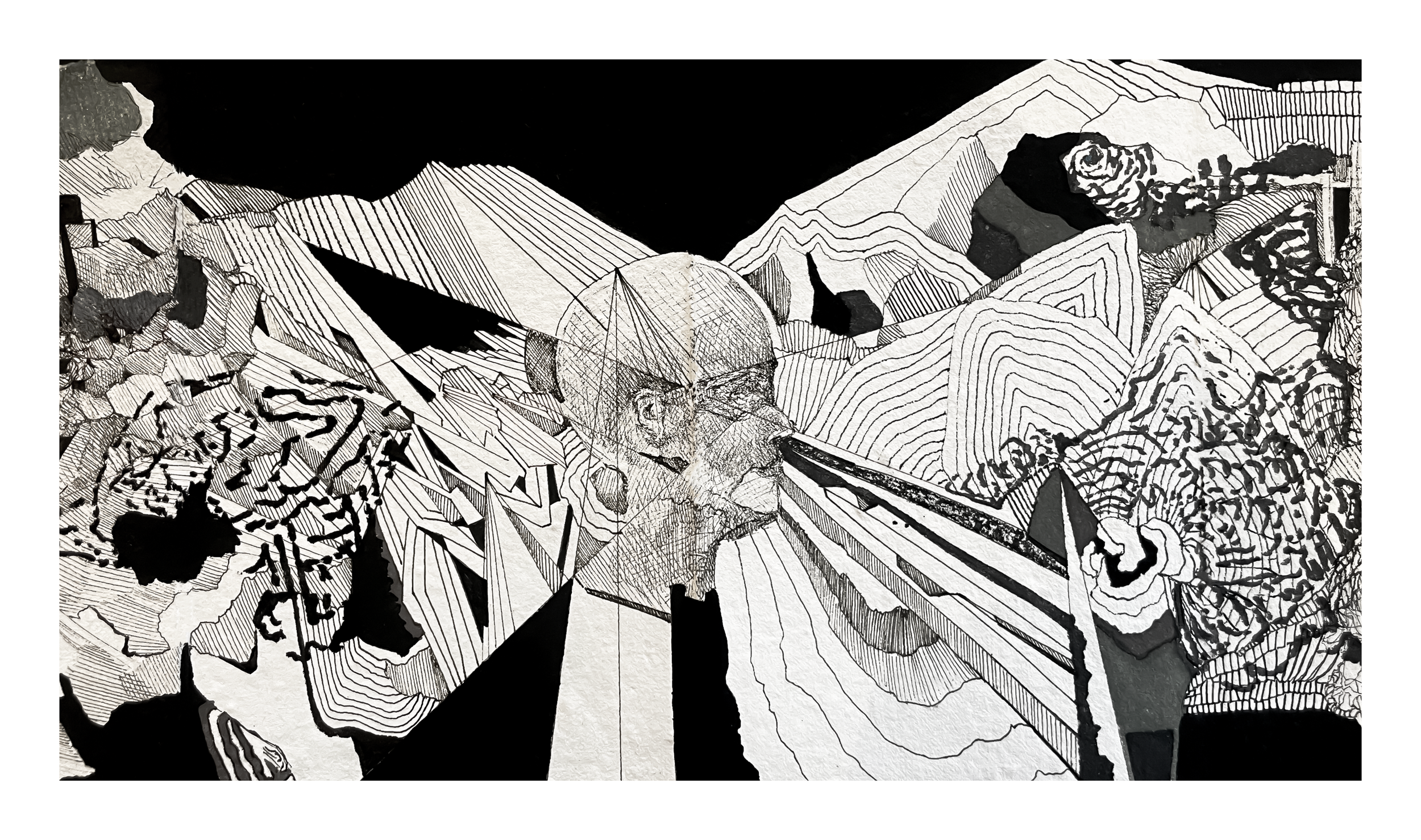
Fragment from The Silent Book
